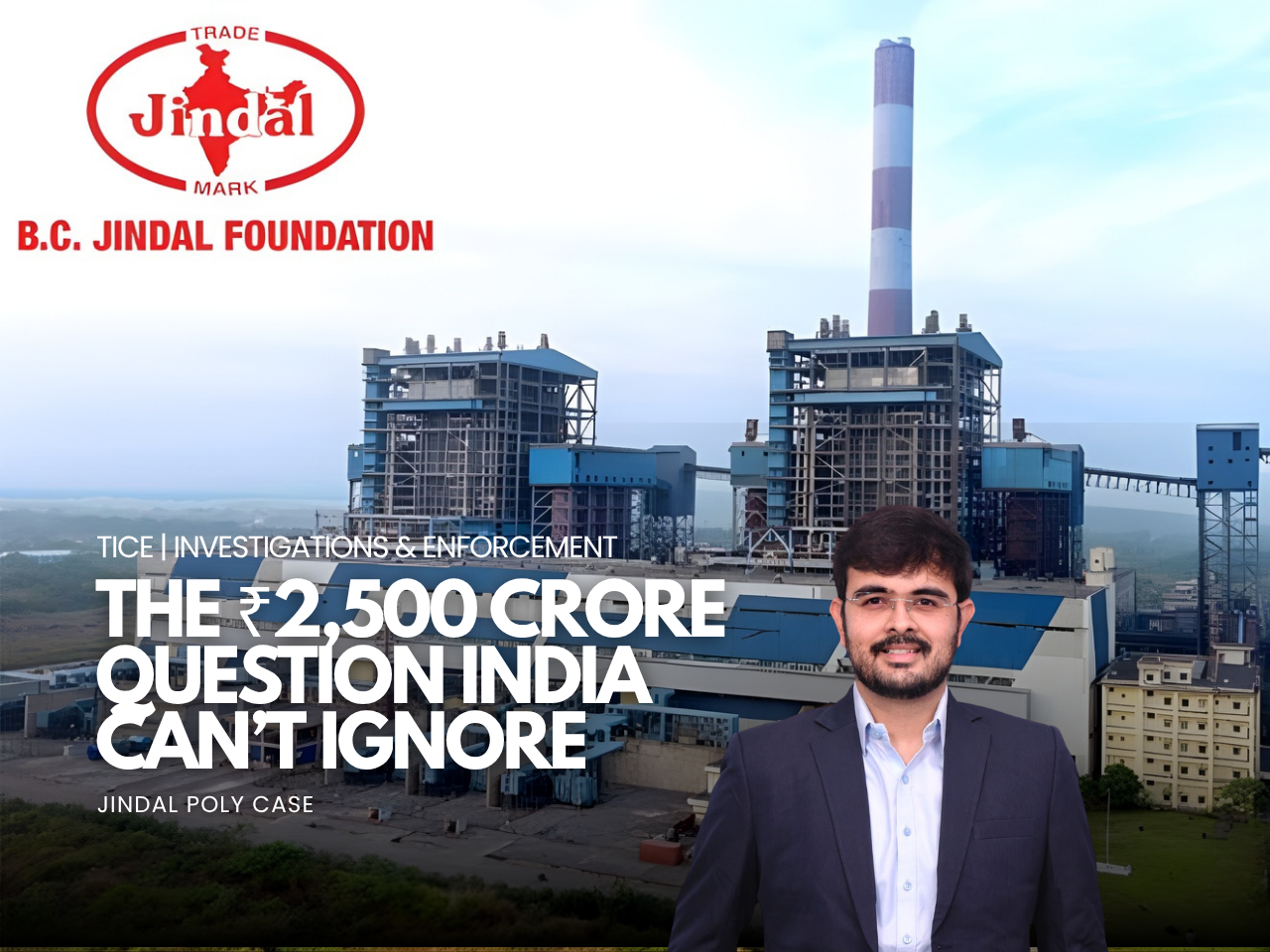

On April 30, 2026, a courtroom in Delhi may quietly decide the future of corporate accountability in India. The case involving Jindal Poly Films—India’s largest packaging films manufacturer—has become the country’s first-ever class action suit under Section 245 of the Companies Act.
Despite its potential to redefine how promoters are held accountable, the case has barely entered mainstream conversation.
That may soon change.
A Market Giant and a Silent Storm
Jindal Poly Films commands a market capitalization of around ₹3,500 crore and is listed on both exchanges—Bombay Stock Exchange and National Stock Exchange of India. Promoters hold a commanding 74.55% stake.
The company belongs to the BC Jindal Group, led by Shyam Sunder Jindal, distinct from the more widely known OP Jindal lineage.
Between 2013 and 2017, the company invested ₹704 crore into group power companies through preference shares. By FY19, that entire investment was written off—effectively declared worthless to shareholders.
The story could have ended there.
It didn’t.
/fit-in/580x348/filters:format(webp)/tice-news-prod/media/media_files/2026/04/16/jindal-ploy-2026-04-16-17-36-45.jpg)
The Transactions That Raised Questions
In May 2021, those same power companies received a massive ₹6,980 crore debt waiver from lenders. The waiver significantly improved their financial standing—and by extension, the value of the very shares earlier written off.
But instead of recovering value for shareholders, the promoters allegedly executed a series of transactions:
- ₹440 crore worth of optionally convertible preference shares (OCPS) sold for just ₹66 crore to SSJ Trust—whose trustees include the promoter himself and his wife
- ₹263 crore worth of redeemable preference shares (RPS) sold for ₹39 crore to a promoter-linked entity
- Total ₹703 crore in assets transferred for only ₹105 crore
The timing raised eyebrows. The company reportedly held ₹1,250 crore in cash reserves, suggesting no financial urgency to sell at steep discounts.
The pattern continued.
A ₹31 crore stake in Jindal Thermal was sold at Re 1 per share to another promoter-linked entity. Meanwhile, the Enforcement Directorate flagged ₹505 crore allegedly routed to a Dubai-based shell company linked to the promoter.
The cumulative alleged loss to minority shareholders: over ₹2,500 crore.
Escalation: Regulators and Courts Step In
Minority shareholders responded with an unprecedented move—they filed a class action suit under Section 245 before the National Company Law Tribunal in Delhi.
The tribunal admitted the case.
The promoters challenged the admission. But the National Company Law Appellate Tribunal dismissed their appeal.
Meanwhile, Securities and Exchange Board of India stepped in with its own findings, adding regulatory weight to the dispute.
Section 245—introduced to empower minority shareholders—had remained unused for eight years. This case activated it for the first time.
/fit-in/580x348/filters:format(webp)/tice-news-prod/media/media_files/2026/04/16/jindal-2026-04-16-17-37-37.jpg) Why April 30 Could Change Everything
Why April 30 Could Change Everything
This is no longer just a company-specific dispute. It is a test case.
If the tribunal rules in favor of minority shareholders, it will establish a powerful precedent: promoters can no longer treat listed entities as extensions of personal balance sheets.
If not, it may reinforce long-standing concerns around enforcement gaps in corporate governance.
Either way, April 30 is a date that could redraw the lines between ownership and accountability in India Inc.
For now, the courtroom is quiet.
But the implications are anything but.
/fit-in/580x348/filters:format(webp)/tice-news-prod/media/media_files/2025/11/03/jayant-mundhra-2025-11-03-13-10-17.png)
Disclaimer
This article draws on publicly available commentary by Jayant Mundhra and reported developments in the Jindal Poly Films case. The matter is sub judice before the National Company Law Tribunal, and all allegations are subject to legal and regulatory determination. TICE News has not independently verified all claims and publishes this for informational purposes only.