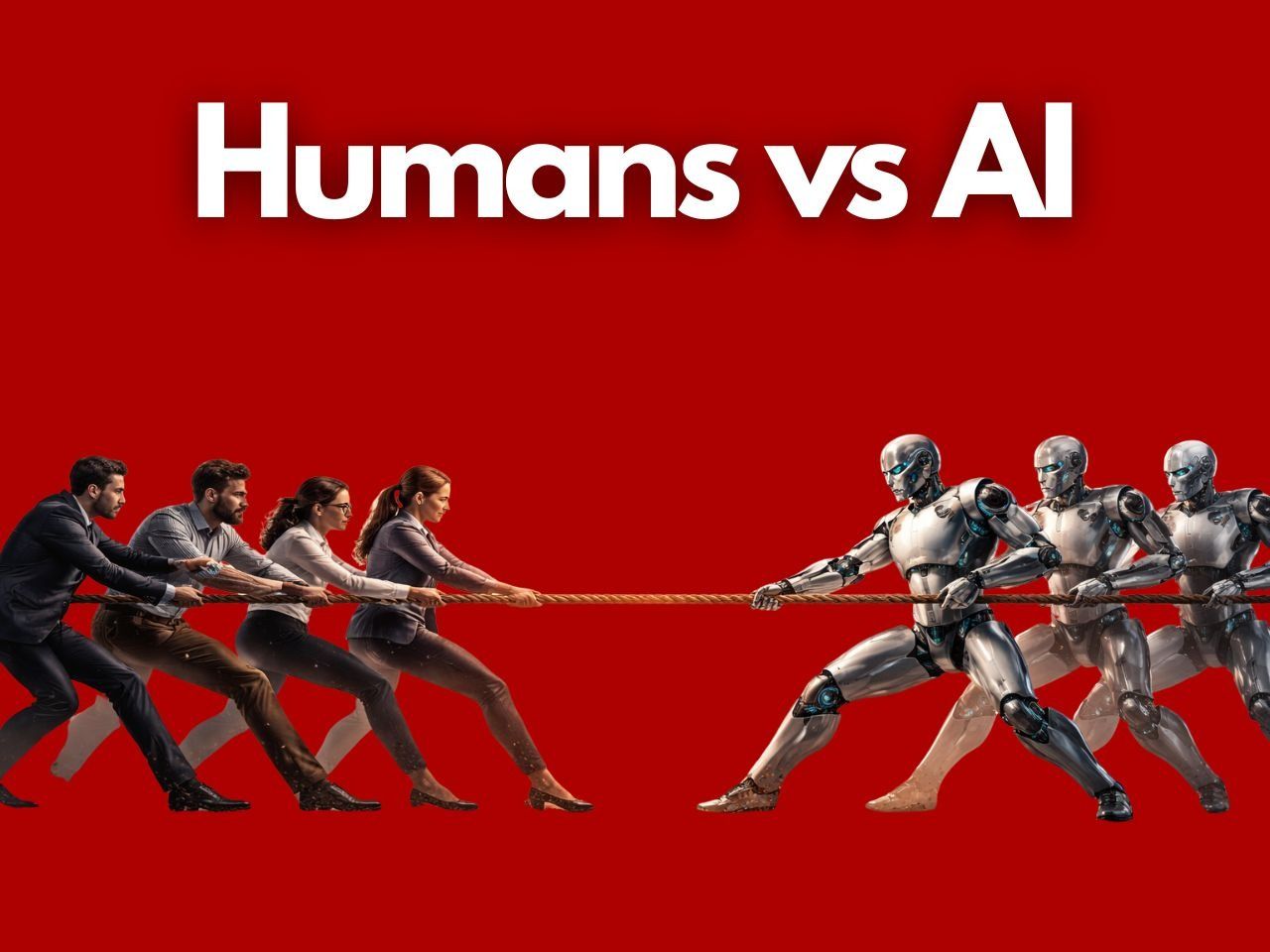

In India’s startup ecosystem, ambition has never been in short supply. What has always been scarce, however, is efficiency—how far a founder can stretch limited capital while trying to build something meaningful. For years, the formula was predictable: raise funds, build a team, scale operations, and hope growth justifies the burn. But that formula is now being challenged in a way that feels less like disruption and more like a quiet, irreversible shift.
A new study by XSquareSEO brings this shift into sharp focus. It does not rely on futuristic speculation or abstract projections. Instead, it asks a simple, almost unsettling question: what if the work done by an entire team earning ₹45–50 lakh annually could be handled by a stack of AI tools at a fraction of the cost?
The Cost Disruption That Changes Everything
The study evaluates seven widely used tools—ChatGPT, Midjourney, Cursor, Intercom AI, ElevenLabs, Perplexity, and Clay—and maps them against human roles across development, content, customer support, research, and sales.
What emerges is not just a comparison, but a redefinition of cost itself. According to the findings, these tools together could perform comparable workloads for roughly ₹4.5 lakh a year. In contrast, assembling a human team for the same functions would typically cost ten times more.
At one level, this is simply a story about efficiency. But at another, it signals something much deeper: a shift in the very foundation of how companies are built. When the baseline cost of execution drops this sharply, it doesn’t just improve margins—it changes decision-making at every level of the business.
From Headcount to Output: A Structural Shift
For decades, startups have scaled in a linear fashion. More users meant more work, which meant more hiring. Growth and headcount moved together in a predictable rhythm.
What this study suggests is that the relationship is breaking down.
Today, a startup can increase output—sometimes dramatically—without a proportional increase in people. The implication is profound. Scale is no longer tightly coupled with team size, and the traditional markers of growth are being quietly rewritten.
Consider software development, long seen as one of the most talent-intensive functions. The study highlights how tools like Cursor can now handle a significant portion of coding tasks at a fraction of the cost of a full-time developer. In content and design, tools such as ChatGPT and Midjourney are already transforming workflows, reducing the time and effort required to produce everything from first drafts to visual assets.
What once required multiple specialists and extended timelines is increasingly being compressed into faster, more efficient cycles.
Not Replacement, But Task Compression
It is tempting to interpret these changes as a direct threat to jobs, but the reality is more nuanced. The study does not suggest that AI is wholesale replacing human workers. Instead, it points to a more subtle but powerful shift: the compression of tasks within existing roles.
Repetitive, time-intensive components of work—responding to standard customer queries, drafting basic content, conducting initial research, even writing portions of code—are increasingly being handled by AI systems.
This leaves behind work that demands judgement, context, and creativity.
The impact, however, is uneven. Entry-level and mid-level roles, which traditionally absorb much of this repetitive work, face the greatest pressure. As AI absorbs these layers, the pathway into many professions could become narrower, even as expectations from remaining roles increase.
The Rise of Lean, AI-First Startups
For founders, the implications are immediate and deeply practical. The study outlines how a typical startup, which might spend ₹20–25 lakh annually on a small operational team, could potentially reduce that cost to under ₹3 lakh using AI tools.
This is not merely a cost-saving exercise. It fundamentally alters how startups are built and scaled.
Lower operational costs mean longer runways. Smaller teams mean faster decision-making. Reduced dependency on hiring allows founders to focus on product and growth rather than constant recruitment.
This is giving rise to a new operating model—the “lean AI-first startup”—where human effort is concentrated in strategic and creative functions, while execution-heavy processes are increasingly automated.
In such a model, even a small team can achieve the output of a much larger organisation, shifting the competitive dynamics of the ecosystem.
A Quiet Shock to the Gig Economy
The ripple effects of this shift extend beyond full-time employment. India’s gig economy, which has grown rapidly in recent years, may also be entering a phase of transition.
Freelancers across writing, design, voice work, and research have benefited from the rise of digital platforms. However, the study notes that AI tools can be significantly cheaper—sometimes by a factor of 50 to 800—for certain types of tasks.
This introduces new pressures on pricing and demand.
The likely outcome is not the disappearance of freelance work, but its evolution. The value of freelancers may increasingly lie not in execution alone, but in their ability to provide insight, originality, and strategic thinking—often in collaboration with AI tools.
The Human Edge Remains Intact
Despite the dramatic cost advantages, the study is clear about AI’s limitations. It does not possess human intuition, emotional intelligence, or true contextual understanding. It can generate outputs quickly, but those outputs often require refinement, direction, and oversight.
In this sense, AI is best understood not as a replacement for human capability, but as an amplifier of it.
Professionals who can effectively integrate AI into their workflows are likely to remain in demand. The shift is less about competing with machines and more about learning how to work alongside them.
A Broader Shift in India’s Employment Landscape
Zooming out, the findings point to a larger structural transformation. Companies are beginning to rethink how teams are built, how roles are defined, and how work is distributed between humans and machines.
For India, this presents both opportunity and complexity. AI-driven efficiency can enhance competitiveness and accelerate innovation. At the same time, the traditional link between business growth and job creation may weaken.
This makes adaptation critical—not just for companies, but for the broader ecosystem, including education systems and policymakers.
The Road Ahead
The notion that AI could replicate a ₹45–50 lakh workforce at a fraction of the cost may still be partly theoretical. But the direction is unmistakable.
The gap between human labour and machine-assisted output is narrowing rapidly, and with it, the rules of building companies are changing.
This is not a story of sudden disruption, but of gradual, compounding change. It is about how work is being reorganised, how value is being recalibrated, and how the definition of a “team” itself is evolving.
For India’s startup ecosystem, the message is clear. The future will not be defined by those who simply adopt AI, but by those who understand how to integrate it meaningfully into the way they build, operate, and grow.