
At a time when global headlines are dominated by rising tensions in West Asia and volatile commodity markets, India’s central bank has chosen a path of calm continuity.
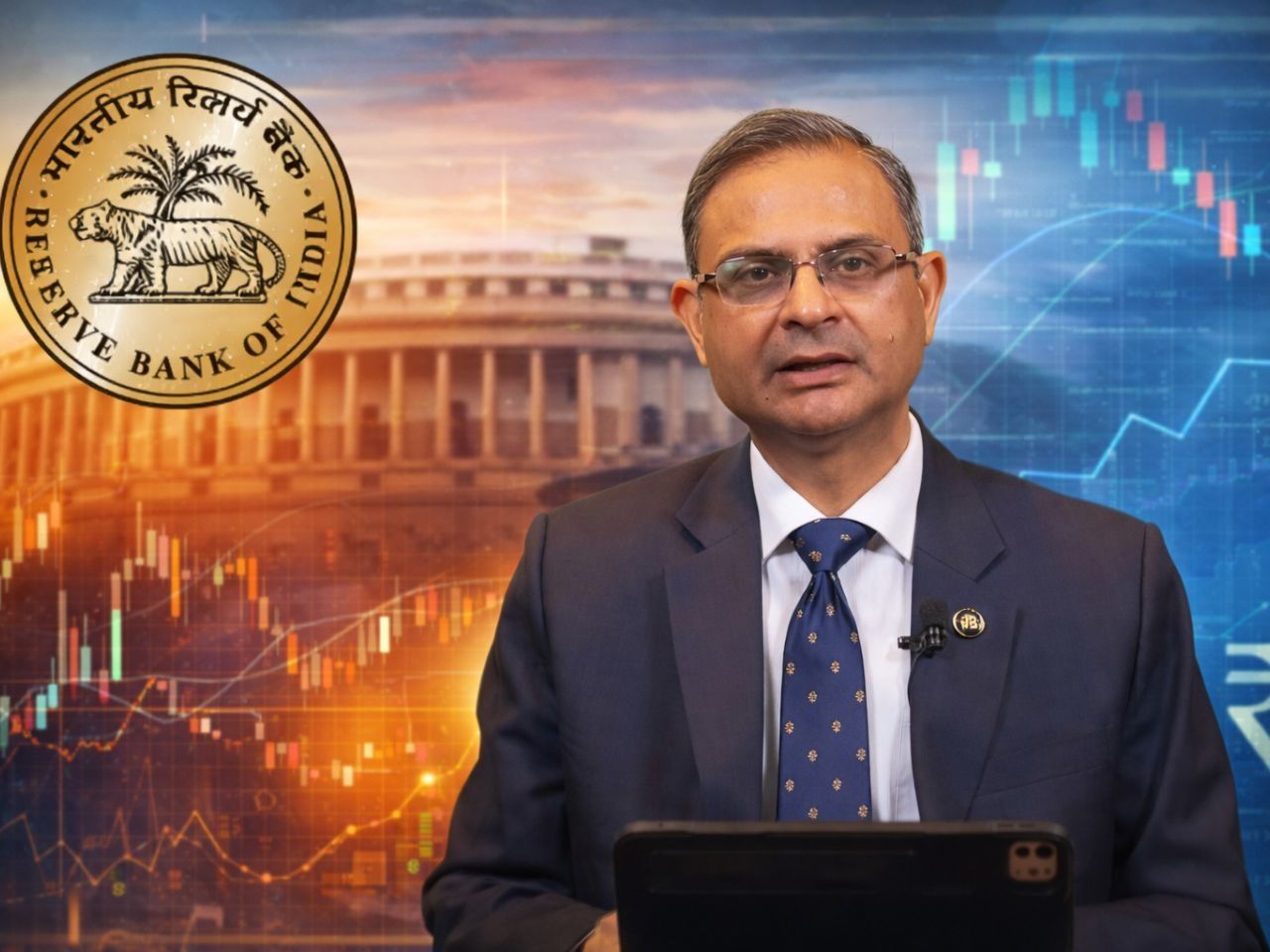
In its first monetary policy decision for the new financial year, the Reserve Bank of India (RBI) has held the repo rate steady at 5.25%. The decision, announced after a three-day meeting of the Monetary Policy Committee (MPC) from April 6 to 8, reflects a deliberate effort to shield the domestic economy from mounting global turbulence.
RBI Governor Sanjay Malhotra confirmed that the MPC unanimously voted to keep rates unchanged. Alongside the repo rate, key policy rates remain steady: the Standing Deposit Facility (SDF) at 5%, and both the Marginal Standing Facility (MSF) rate and bank rate at 5.5%.
RBI Repo Rate
Global Tensions Cloud the Economic Outlook
This pause comes at a critical juncture. What began as a relatively stable macroeconomic environment at the start of the year has quickly shifted. Escalating geopolitical tensions in the Middle East have disrupted global supply chains, triggered volatility in financial markets, and pushed up energy prices—factors that are once again bringing inflation concerns to the forefront.
The ripple effects are already visible. Oil price premiums have risen, safe-haven demand has strengthened the US dollar, and emerging market currencies—including the Indian rupee—are facing renewed pressure. For policymakers, the challenge is clear: protect growth without letting inflation spiral.
A Balancing Act Between Growth and Stability
Yet, amid the uncertainty, the RBI’s message is one of cautious confidence. India, the central bank asserts, is entering this phase from a position of relative strength. Compared to previous global crises, the country’s macroeconomic fundamentals remain resilient, offering a buffer against external shocks.
By maintaining the status quo on interest rates, the RBI is effectively buying time—allowing the economy to absorb global shocks without tightening financial conditions prematurely. For businesses and households, this translates into stability in borrowing costs, a crucial factor at a time when uncertainty is already high.
Industry voices have largely backed the move. ASSOCHAM described the decision as a “calibrated step,” highlighting its role in balancing growth and inflation. According to Secretary General Saurabh Sanyal, the policy ensures that economic momentum is sustained while keeping price pressures in check.
More importantly, steady rates are expected to keep credit flowing to critical sectors such as MSMEs, manufacturing, and infrastructure—segments that form the backbone of India’s growth story.
Looking ahead, the RBI has made it clear that flexibility will be key. With geopolitical developments still unfolding and global conditions evolving rapidly, future policy decisions will remain data-driven.
For now, the message is simple but significant: in a world of growing uncertainty, India’s central bank is choosing stability over reaction—holding its ground while keeping a close watch on the road ahead.