In today’s global energy markets, uncertainty is no longer an exception—it is the rule. From conflicts in West Asia to sanctions, shipping disruptions and sudden policy shifts by major economies, crude oil prices are now reacting less to pure supply-demand logic and more to geopolitical tremors. And for a country like India, which depends heavily on imported oil, this changing reality is reshaping how energy security is planned and protected.
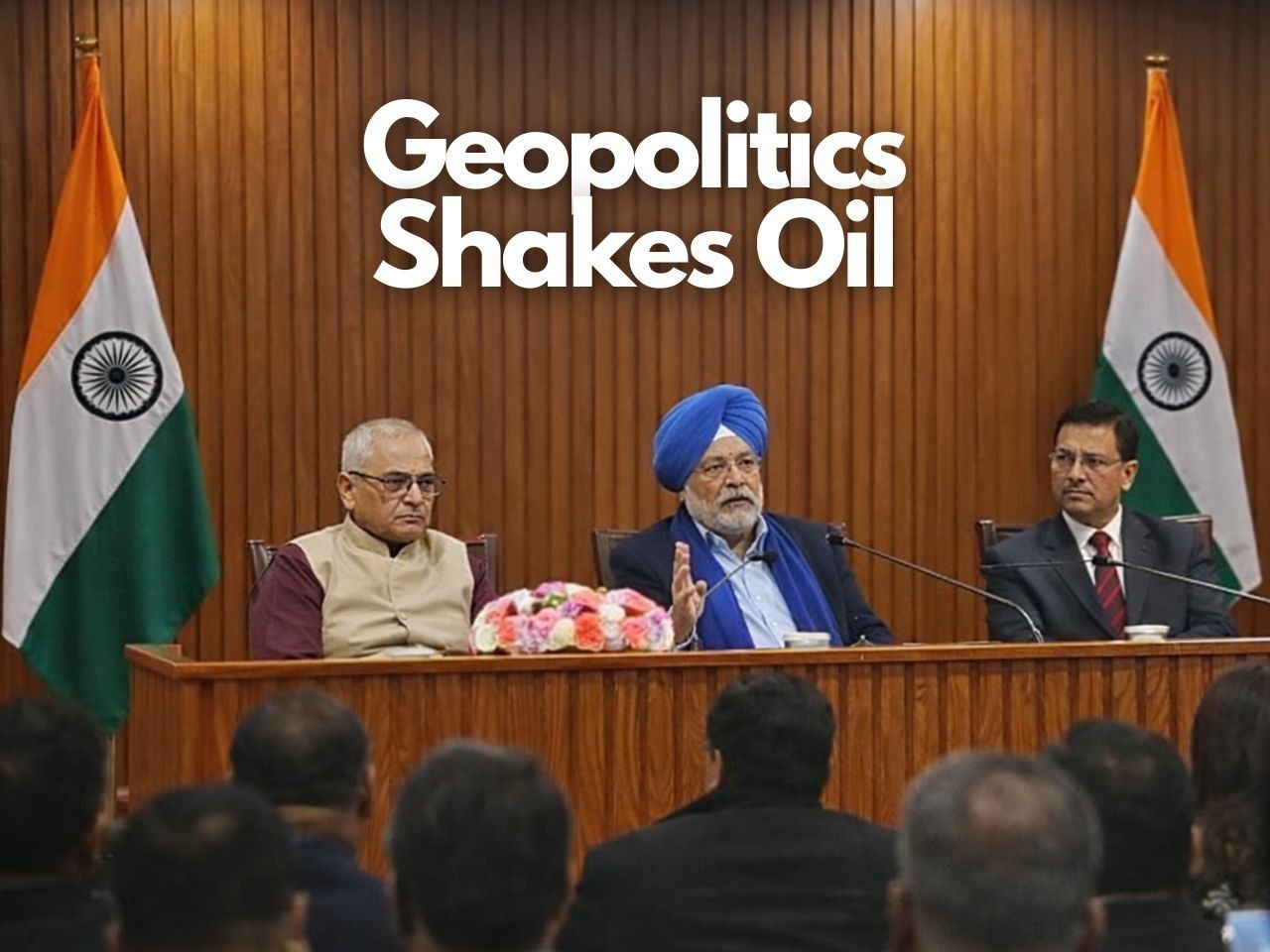
That was the central message from Union Minister for Petroleum and Natural Gas Hardeep Singh Puri, who on Thursday laid out India’s perspective on crude oil volatility while addressing the Curtain Raiser press conference for India Energy Week (IEW) 2026. His remarks offered a clear-eyed view of a world where geopolitical shocks are no longer temporary disturbances but a permanent feature of the global energy system.
Volatility Is Structural, Not Temporary
Puri cautioned against the earlier assumption that oil markets would eventually stabilise once conflicts eased or supply adjusted. That framework, he said, no longer applies.
“Geopolitical shocks can no longer be seen as short-term disruptions,” the Minister said, underlining that uncertainty driven by wars, sanctions, trade measures and unilateral policy actions has become embedded in the energy ecosystem itself.
Even though global crude supply remains broadly adequate, prices continue to swing sharply at the slightest hint of political tension. According to Puri, this hypersensitivity means that even relatively small developments can now trigger outsized reactions in oil markets.
For India, the implications are significant. The country imports nearly 90 per cent of its crude oil, making it particularly vulnerable to sudden price spikes. Such instability, Puri noted, directly affects inflation management, fiscal planning and overall macroeconomic stability.
Adequate Supply, But Prices Still on Edge
Responding to questions on whether additional supply from sanctioned producers like Venezuela or Iran could ease pressure on prices, the Minister struck a note of realism.
“Will more energy from Venezuela and Iran come on the market? I really don’t know,” he said candidly. “But I don’t see prices going down purely on that basis.”
Instead, Puri pointed out that incremental supply growth is increasingly coming from the western hemisphere. Countries such as Brazil, Guyana, Suriname, Canada and the United States are contributing to global supply, helping prevent sharp price escalations.
“If energy supply remains sufficient, prices are unlikely to rise sharply and should broadly remain stable,” he said, while emphasising that geopolitics continues to overshadow these fundamentals.
Russia, Rebalancing and Market Reality
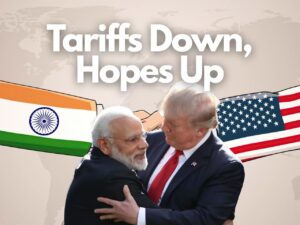
On the sensitive issue of India’s crude oil imports from Russia—particularly amid reports of pressure from the United States—the Minister chose his words carefully.
“I am not going into geopolitical strategy,” Puri said. “Nations do not discuss their strategies during press briefings.”
He did, however, underline a key point: India is not facing any shortage of oil. As domestic consumption rises, the government is continuously diversifying its import basket and exploring new sources to ensure uninterrupted supply.
Puri recalled how India’s crude sourcing patterns changed after the Russia-Ukraine conflict in February 2022, when imports from certain regions rose sharply before moderating again as markets adjusted.
“The market is the ultimate determinant,” he said, reinforcing the government’s position that sourcing decisions are guided by availability, affordability and national interest rather than political signalling.
Boosting Domestic Production for Long-Term Stability
While import diversification remains crucial, Puri stressed that India is also working to strengthen its domestic production base. A key pillar of this effort is the Samudra Manthan initiative, which focuses on expanding offshore and deep-sea exploration.
“We are drilling a number of wells each year, and through this initiative, we will multiply them,” the Minister said.
Greater domestic output, he explained, can act as a long-term buffer against global price shocks and improve India’s overall price resilience. However, he was quick to add that traditional models of price correction—where supply-demand balance alone dictated outcomes—are increasingly ineffective in a world shaped by sanctions, export controls and trade restrictions.
“Geopolitics today has a disproportionate influence on energy markets,” he said.
Energy Security Beyond Oil and Gas
Looking ahead, Puri broadened the definition of energy security beyond crude oil and natural gas. As the global transition to clean energy accelerates, critical minerals such as lithium, cobalt and nickel are emerging as the new strategic resources.
The Minister warned that the same vulnerabilities seen in crude oil markets could soon surface in mineral supply chains, as global competition for these resources intensifies.
In this context, he highlighted India’s deep-sea exploration mission under Samudra Manthan, aimed at accessing polymetallic nodules rich in strategic minerals. India has secured exploration rights in the Central Indian Ocean Basin from the International Seabed Authority, placing it among a select group of nations with long-term resource security ambitions.
“Energy security in the future will depend as much on minerals as it does on hydrocarbons today,” Puri said, while assuring that environmental safeguards would remain central to India’s approach.
India Energy Week 2026: Setting the Global Agenda
All these issues—volatile oil markets, energy security, investment and decarbonisation—will take centre stage at India Energy Week 2026, scheduled to be held from 27–30 January 2026 at ONGC ATI, Goa.
The upcoming edition is expected to be the largest yet, with over 75,000 delegates, 600 exhibitors, and participation from energy ministers, policymakers and industry leaders from across the world.
Describing IEW as the first major global energy event of the year, Puri said the platform would focus on strengthening energy security, catalysing investment and advancing practical decarbonisation pathways—despite the persistent volatility in oil markets.
As geopolitical pressures continue to cast a long shadow over crude prices, the Minister summed up India’s challenge succinctly: managing immediate import dependence while steadily building long-term strategic autonomy.
In an era where geopolitics drives the oil narrative, India, it seems, is preparing not just to respond—but to adapt.