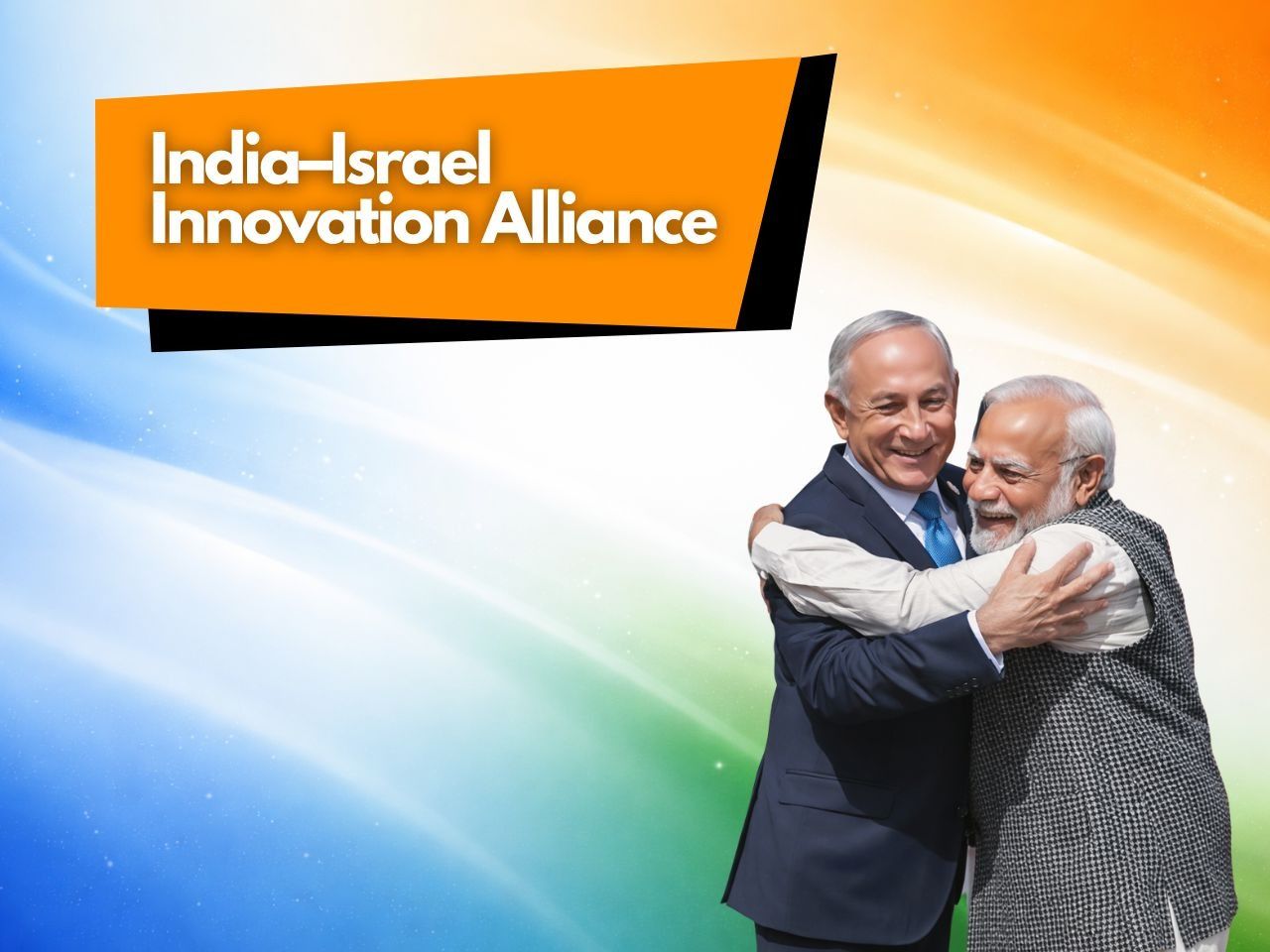
In a world increasingly defined by technology, innovation and strategic alliances, two nations—separated by geography but united by ambition—are finding stronger common ground than ever before.
Addressing the Knesset in Israel, Prime Minister Narendra Modi painted a powerful picture of the growing synergy between India’s fast-expanding economy and Israel’s globally recognised innovation ecosystem. His speech was not just diplomatic courtesy—it was a forward-looking blueprint for an economic, technological and strategic partnership that is steadily gaining momentum.
At the heart of the address was a shared belief: when innovation meets scale, transformation follows.
Modi in Israel
The “Start-Up Nation” Meets the World’s Fastest-Growing Major Economy
Calling Israel the “start-up nation,” Prime Minister Modi acknowledged the country’s global reputation as a technology powerhouse. He recalled a defining moment in 2018, when he inaugurated the iCreate Technology Business Incubator alongside then Prime Minister Benjamin Netanyahu.
That incubator has since supported nearly 900 startups—a striking example of how structured collaboration can fuel entrepreneurial growth. The milestone, Modi noted, reflects the deepening innovation partnership between the two countries.
The symbolism is strong. Israel brings cutting-edge innovation. India brings unmatched scale and market depth. Together, they form what the Prime Minister described as a natural foundation for a forward-looking economic partnership.
Positioning India as the world’s fastest-growing major economy in recent years, Modi expressed confidence that India will soon rank among the top three global economies. In that context, partnerships like India–Israel are not just beneficial—they are strategic necessities.
Technology as the Bridge: AI, Quantum, and Semiconductors
The Prime Minister placed strong emphasis on technology as the central pillar of future cooperation.
He pointed out that India recently hosted what he described as the world’s largest and most democratised AI Impact Summit, with participation from over 100 countries. The summit underscored India’s intent to shape global conversations around artificial intelligence—not just adopt it.
Modi identified three high-impact sectors where India and Israel can build strong synergies:
-
Quantum technologies
-
Semiconductors
-
Artificial intelligence
These sectors are not merely emerging industries—they are the foundations of future economic and strategic power.
Beyond core tech, he also emphasised collaboration through India’s Digital Public Infrastructure (DPI), particularly in enabling cross-border financial linkages. With India’s digital architecture increasingly becoming a model for inclusive and scalable governance, such cooperation opens new dimensions for fintech and digital economy partnerships.
Trade, Investment and the Road Ahead
Economic partnership was another central theme of the address.
The Prime Minister reaffirmed India’s commitment to expanding bilateral trade, boosting investment flows and encouraging joint infrastructure projects. He highlighted that the Bilateral Investment Treaty signed last year provides confidence and predictability to businesses on both sides—an essential ingredient for long-term capital flows.
Even more significantly, negotiations are underway for an ambitious Free Trade Agreement aimed at unlocking untapped trade potential. If concluded, such an agreement could dramatically expand economic engagement across sectors—from technology to manufacturing and beyond.
The message was clear: the political intent exists, and the economic architecture is being built to support deeper commercial integration.
Strategic Corridors and Multilateral Platforms
Modi also highlighted emerging multilateral cooperation platforms that further strengthen India–Israel collaboration.
These include:
-
The India–Middle East–Europe Economic Corridor
-
The I2U2 framework involving India, Israel, the UAE and the United States
These platforms position the India–Israel relationship within a broader strategic geography that connects Asia, the Middle East and Europe. They represent a shift from bilateral engagement to structured regional and global cooperation.
Defence: A Pillar of Trust in Uncertain Times
Defence and security remain a core pillar of the relationship.
Referring to the MoU on Defence Cooperation signed in November last year, the Prime Minister stressed that strong defence collaboration between trusted partners is vital in today’s uncertain global environment.
In a world marked by geopolitical instability, strategic partnerships built on trust carry heightened importance. India and Israel have steadily strengthened defence cooperation over the years, and this framework adds further depth and institutional clarity to that partnership.
Agriculture: From Innovation to Impact on the Ground
While technology and defence grabbed headlines, agriculture emerged as a powerful example of collaboration delivering grassroots impact.
Modi praised Israel’s expertise in precision irrigation and water management—areas where the country has global leadership. He noted that 43 Centres of Excellence established across India have already trained over half a million farmers.
These centres represent technology transfer in action—improving productivity, water efficiency and crop outcomes.
Looking ahead, the Prime Minister proposed expanding this network to 100 centres to benefit millions more farmers and fishermen. The vision is ambitious but grounded in proven success.
People at the Core
Beyond economics, technology and defence, Modi emphasised that people-to-people ties remain the heart of India–Israel relations.
He highlighted the growing interest in yoga and Ayurveda in Israel, reflecting cultural exchange beyond formal diplomacy. He also acknowledged the contributions of Indian caregivers and skilled workers in Israel, recognising the human link that strengthens bilateral trust.
In many ways, these connections provide the emotional and cultural glue that sustains long-term partnerships.
The address at the Knesset was not merely ceremonial. It underscored a broader strategic reality: India and Israel are entering a phase of deeper, structured and multi-dimensional cooperation.
Israel brings technological leadership.
India brings economic scale and growth momentum.
Together, they are working toward an innovation-driven, investment-backed and strategically aligned partnership.
From startups to semiconductors, from defence to digital finance, and from agriculture to people-to-people ties—the roadmap is expanding.
As India positions itself among the world’s top economies and Israel continues to lead in innovation, the partnership appears less transactional and more transformational.
And as Prime Minister Modi made clear in his address, this is only the beginning of the next chapter.