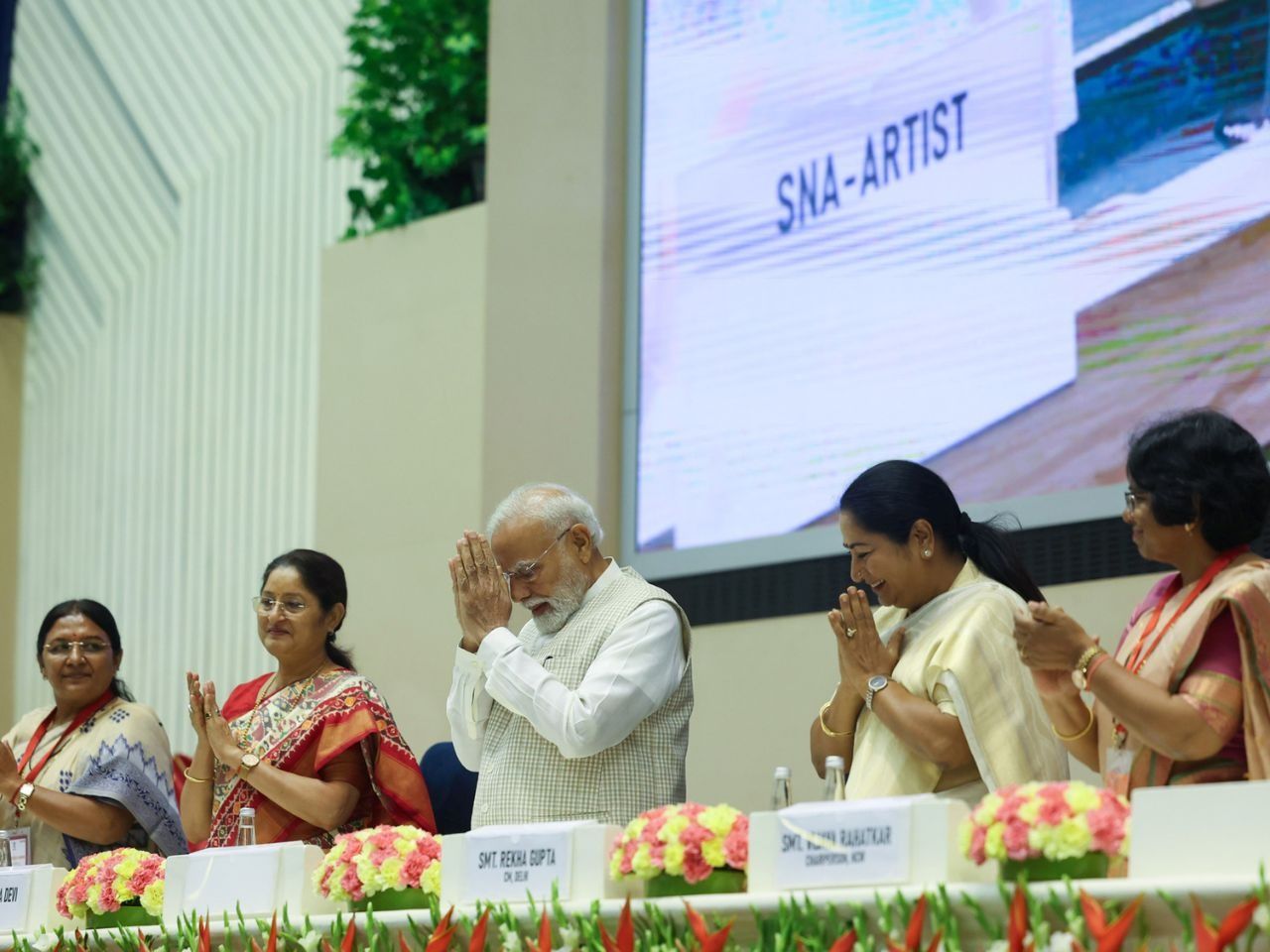

At a time when India is navigating both economic ambition and social transformation, a key conversation took centre stage at Vigyan Bhawan in New Delhi. The Nari Shakti Vandan programme—organised to spotlight women’s empowerment and participation in governance—brought together policymakers, stakeholders, and voices from across the country.
Addressing the gathering, Narendra Modi used the platform to underline a broader national vision: one where women are not just beneficiaries of development, but active architects of it.
The timing of the event added emotional and historical depth. Coinciding with Baisakhi and upcoming regional New Year celebrations, the Prime Minister also paid tribute to the martyrs of the Jallianwala Bagh massacre—connecting the present moment with India’s legacy of resilience and sacrifice. Against this backdrop, he described the current phase as a “historic juncture,” signalling a major step forward in recognising and institutionalising women’s role in nation-building.
A Defining Legislative Moment on the Horizon
At the heart of the address was the Nari Shakti Vandan Act, 2023—legislation that seeks to enhance women’s representation in legislative bodies. Passed unanimously in Parliament, the Act represents a long-awaited structural shift in India’s democratic framework.
Calling for its timely implementation, the Prime Minister noted that a decades-long wait—from state assemblies to the national Parliament—is now close to ending. With a special parliamentary session set to begin on April 16, he emphasised that the process would be guided by dialogue, cooperation, and collective participation—principles he said would further strengthen the dignity of Parliament.
Rising Aspirations, Growing Participation
Beyond legislative reform, Modi pointed to a visible shift in aspiration among women across India. Increasingly, women are looking beyond traditional roles and stepping into public life with confidence—seeking representation in state assemblies and the Lok Sabha.
Encouraging this momentum, he urged women to actively engage with their Members of Parliament, share their expectations, and remain deeply involved in shaping the democratic process.
From Freedom Struggle to Modern Governance
The Prime Minister traced the role of women through India’s democratic journey—from their contributions during the freedom movement to their presence in the Constituent Assembly. He reiterated that women in leadership roles have consistently delivered strong outcomes, building legacies that stand out across sectors.
This historical continuity, he suggested, is now evolving into a more structured and widespread participation in governance.
Grassroots Leadership Driving Real Change
One of the most striking examples of this shift lies at the grassroots level. Today, over 14 lakh women are part of panchayati raj institutions, with participation reaching nearly 50 percent in several states.
According to the Prime Minister, this scale of involvement has not only drawn global attention but has also improved governance outcomes. Areas such as water management, healthcare, education, and nutrition have seen tangible benefits—underscoring the effectiveness of women-led leadership. Initiatives like the Jal Jeevan Mission stand as key examples of this impact.
“The journey from panchayat to Parliament is becoming easier,” he noted, pointing to a more seamless pathway for women in politics.
A Lifecycle Approach to Empowerment
Framing women’s empowerment as a continuous journey rather than a one-time intervention, Modi highlighted the government’s “lifecycle approach” since 2014.
This includes schemes such as Beti Bachao Beti Padhao, Pradhan Mantri Matru Vandana Yojana, and Sukanya Samriddhi Yojana, alongside broader initiatives under Swachh Bharat, Ujjwala Yojana, and Ayushman Bharat.
The idea, he explained, is to ensure consistent support—from birth through education, health, and economic independence—creating an ecosystem where women can thrive at every stage of life.
Economic Empowerment Taking Centre Stage
A significant portion of the address focused on financial independence as a cornerstone of empowerment.
Under Pradhan Mantri Awas Yojana, more than 3 crore homes have been registered in women’s names—giving them direct ownership and security. Financial inclusion has also expanded rapidly, with over 32 crore women opening bank accounts under Jan Dhan Yojana.
Entrepreneurship is another area witnessing strong growth. With more than 60 percent of Mudra Yojana loans going to women, a new wave of women-led enterprises is emerging across the country.
The Rise of ‘Lakhpati Didis’ and Collective Growth
The growth of self-help groups has further accelerated this transformation. Nearly 10 crore women are now part of such networks, contributing to local economies and community development.
Among them, over 3 crore women have achieved the status of “Lakhpati Didis”—a milestone that reflects both financial progress and social mobility. These women are not only earning but also reshaping rural economic structures.
Breaking Barriers Across Sectors
The Prime Minister also highlighted a visible shift in societal norms. Women are increasingly entering sectors once considered male-dominated, including defence and aviation.
India today has the highest percentage of women pilots in the world, he noted, pointing to a broader change in opportunities and mindset. At the same time, women’s participation in higher education—especially in science and mathematics—is steadily rising.
Strengthening Safety Through Legal Reforms
Addressing concerns around safety, Modi referred to reforms under the Bharatiya Nyaya Sanhita, aimed at making the justice system more responsive and accessible for women.
Provisions such as e-FIR and Zero FIR, he said, are designed to improve access to justice and provide stronger institutional support to victims.
A Collective Call for the Future
As the address drew to a close, the message shifted from policy to participation. The Prime Minister reiterated that empowering women is not just a government responsibility but a collective national effort.
Ensuring that women have equal representation in decision-making, he said, is essential for building a stronger and more inclusive future.
“The government is supporting women at every stage of life,” he affirmed, while calling on citizens to expand opportunities and strengthen participation.
In essence, the address reflected a larger transition in India’s development narrative—one that moves from women-centric welfare to women-led progress, placing them firmly at the centre of the country’s next chapter.