As the lights dimmed inside the packed halls of the India AI Impact Summit in New Delhi, there was a palpable sense that something more than just policy talk and panel discussions was about to unfold. India’s AI ambitions have been growing louder by the day — but this time, the spotlight shifted from software to something you can actually wear.
In a moment that blended technology, symbolism and national pride, Indian AI startup Sarvam AI unveiled its first-ever AI hardware product: a pair of smartglasses called Sarvam Kaze. And in a move that underscored the significance of the launch, Prime Minister Narendra Modi became the first person to try them.
Sarvam AI Smartglass Kaze
From AI Models to AI Hardware
Sarvam AI has already been making waves in India’s tech ecosystem. Just days before the summit, the startup grabbed headlines for outperforming ChatGPT and Google Gemini in certain benchmarks — positioning itself as one of India’s most promising AI challengers.
Now, the company is taking a bold step beyond software.
In a post shared on X during the summit, Sarvam AI co-founder and chief Pratyush Kumar teased the company’s entry into hardware. Accompanying the announcement was a minute-long video showcasing sleek AI smartglasses that immediately drew comparisons to Meta’s Ray-Ban smartglasses, complete with visible camera placements embedded into the frame.
The name of the device: Sarvam Kaze.
But this was more than just a product reveal. It was a statement.
PM Modi Tries Sarvam Kaze
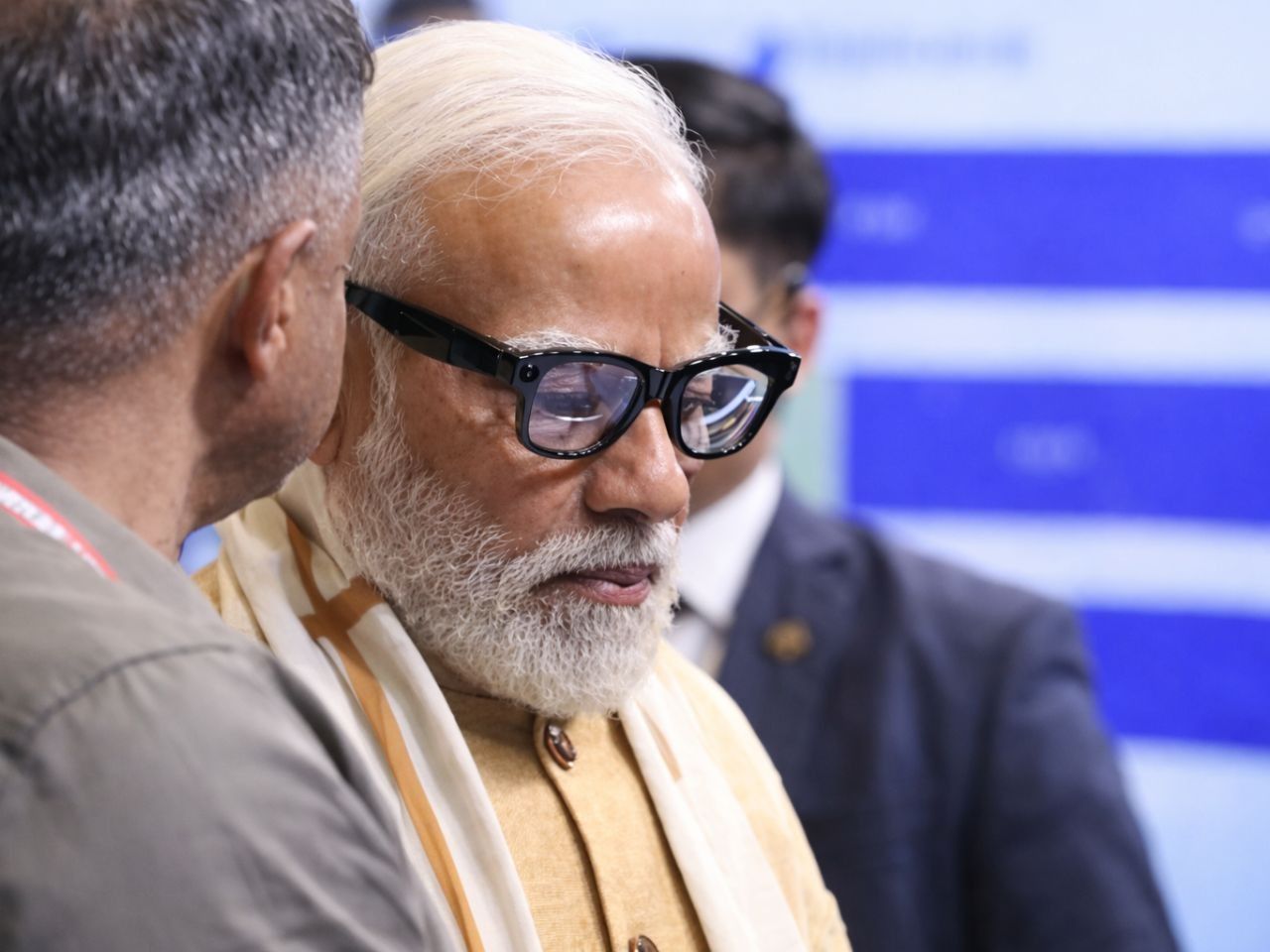
Perhaps the most striking moment of the announcement was a photograph shared by Kumar — showing Prime Minister Narendra Modi wearing the Sarvam Kaze smartglasses.
“The first person to try them? The Prime Minister,” Kumar wrote in his post.
The image quickly circulated across social media, adding both credibility and national significance to the launch. For a young Indian AI startup, having the Prime Minister test its first hardware product at a national AI summit sends a clear message: India wants to build, not just consume, the future of AI.
Designed and Built in India
Sarvam AI has emphasised that Kaze is not just assembled locally — it is designed and built in India.
“Launching Sarvam Kaze, our foray into getting our models into your hands with our devices — designed and built here in India!” Kumar wrote.
If delivered as promised, Sarvam Kaze could become the first India-made AI smartglasses device in the market. In a sector currently dominated by global technology giants, that distinction carries weight.
India has long been known as a software powerhouse. With Kaze, Sarvam AI is attempting to prove that the country can also build world-class AI hardware.
What Exactly Does Sarvam Kaze Do?
According to the company, Sarvam Kaze is built with a simple but ambitious idea: move AI beyond screens.
“Sarvam Kaze moves intelligence from the screen to the real world. You wear it. It listens, understands, responds, and captures what you see. And you can build custom experiences for it with the Sarvam platform,” Kumar explained.
In practical terms, this means the glasses are designed to:
-
Listen to conversations and commands
-
Understand context using AI
-
Respond in real time
-
Capture what the user sees
-
Allow developers to build custom AI-powered experiences
Unlike devices that rely on third-party AI engines, Sarvam says Kaze will run on its in-house AI models. This vertical integration — building both the AI models and the hardware — signals a deeper ambition to create a fully Indian AI ecosystem.
The company has confirmed that Sarvam Kaze is scheduled to launch in May 2026.
Why Smartglasses — And Why Now?
The global smartglasses market is quietly gaining momentum.
Meta reportedly sold over 7 million units of its Meta Ray-Ban smartglasses in 2025 alone. Industry reports also suggest that Apple is working on its own smartglasses device. What once seemed like experimental tech is now becoming a serious consumer category.
Smartglasses represent a shift in how people interact with technology — away from constantly checking phones and toward more ambient, wearable computing. Instead of pulling out a device, you simply wear it.
Sarvam appears to be betting that this category is at an inflection point — and that India should not miss the moment.
By entering the space early, the startup positions itself not just as a domestic player but as a potential global contender in a fast-evolving segment.
A Bigger Signal for India’s AI Ambitions
The announcement at the India AI Impact Summit was not just about a gadget. It reflects a larger narrative.
India has been accelerating efforts to become a global AI leader — from policy support to funding and ecosystem development. Startups like Sarvam AI are emerging as symbols of that push: building foundational models, competing globally, and now stepping into hardware.
If successful, Sarvam Kaze could mark the beginning of a new chapter — one where Indian AI innovation is not confined to code running on foreign devices, but embedded into products built at home.
For now, Sarvam has only offered a teaser. Specifications, pricing and detailed features are yet to be revealed. But one thing is clear: with the Prime Minister already having tried the device and a launch planned for May 2026, Sarvam AI has ensured that all eyes are now on Kaze.
And as the smartglasses race heats up globally, India may have just stepped onto the track — not as a spectator, but as a serious contender.