
India’s startup story is no longer just about unicorn valuations, funding rounds or flashy technology breakthroughs. Increasingly, the conversation is shifting toward something bigger — how Indian entrepreneurs, manufacturers and small businesses can collectively shape the country’s economic future.
At a time when global supply chains remain fragile, geopolitical tensions continue to impact trade and countries across the world are turning inward to protect domestic industries, India is doubling down on its self-reliance mission. And according to Union Commerce and Industry Minister Piyush Goyal, startups and MSMEs will sit at the centre of that transformation.
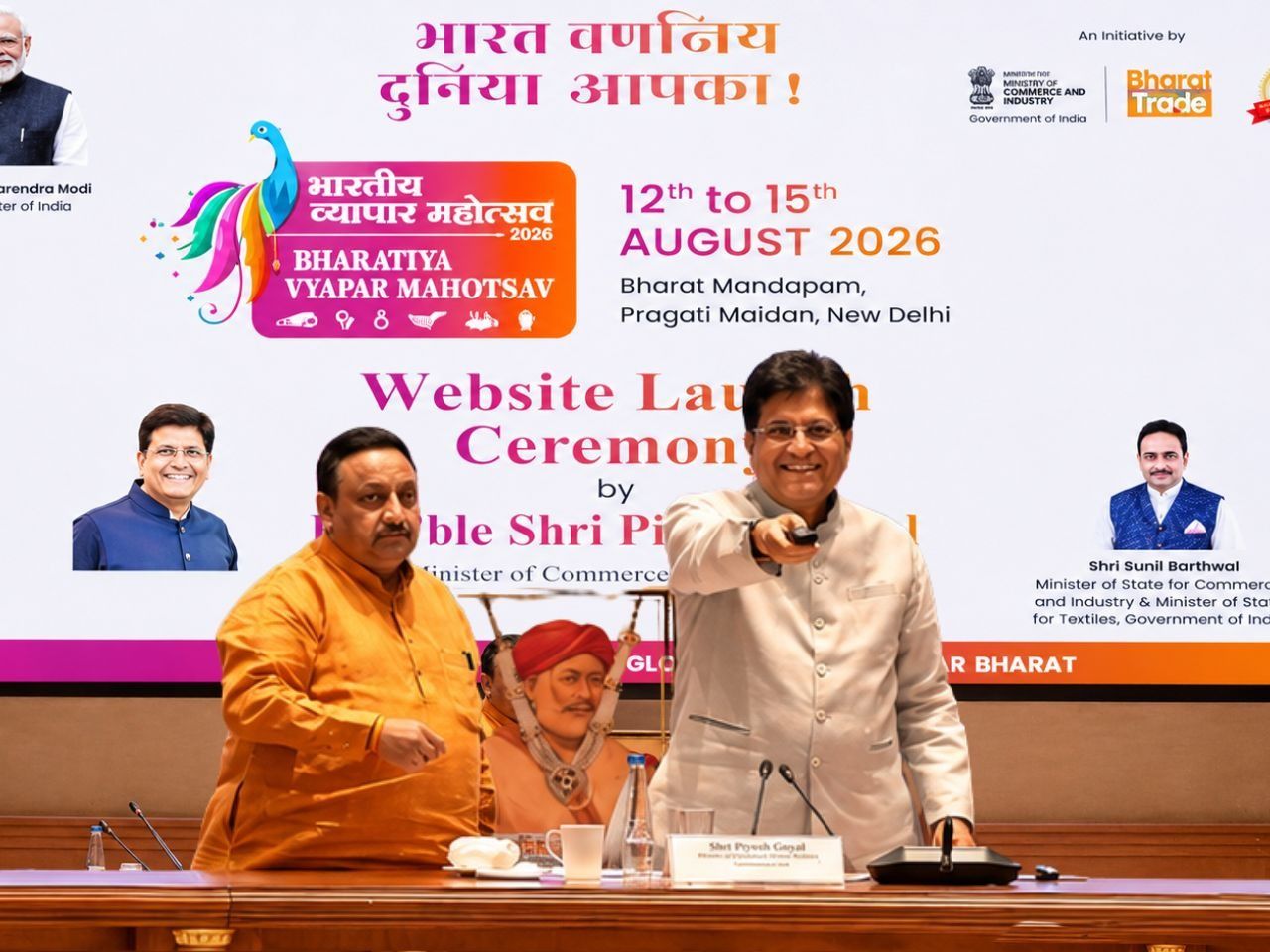
Speaking at the website launch ceremony of the Bharatiya Vyapar Mahotsav in New Delhi on Monday, Goyal delivered a strong message to Indian entrepreneurs and industry leaders: India must urgently strengthen domestic manufacturing, support indigenous businesses and reduce its dependence on imports if it wants to emerge as a truly self-reliant global economic powerhouse.
The minister’s remarks come at a significant moment for India’s economy. The country has witnessed rapid growth in digital adoption, manufacturing ambitions and exports over the last few years, but it still remains heavily dependent on foreign products and imported components across several sectors — from electronics and machinery to medical devices and industrial equipment.
For Goyal, this is not just an economic challenge. It is a national opportunity.
The New Phase of India’s Startup Story
India’s startup ecosystem has traditionally been dominated by consumer internet businesses, fintech, quick commerce, SaaS and platform-driven innovation. But the government now wants the next wave of entrepreneurs to move deeper into manufacturing, industrial production, import substitution and export-led growth.
During his address, Goyal urged startups and MSMEs to identify gaps where imported goods can be replaced with locally manufactured alternatives. He encouraged entrepreneurs to study import trends through the Commerce Ministry’s trade portal and build businesses around products India currently buys from overseas markets.
The message was clear: India cannot become self-reliant if domestic demand continues to be fulfilled by foreign manufacturers.
He noted that India’s rapidly growing middle class and rising consumption levels are creating enormous business opportunities. However, if Indian companies fail to scale quickly and competitively, imported products will continue dominating large parts of the market.
This shift in narrative is important. For years, India’s startup ecosystem has largely celebrated technology disruption and digital convenience. Now, policymakers are increasingly pushing founders to think beyond apps and marketplaces and focus on sectors that can create deeper industrial capacity, employment and long-term economic resilience.
India’s Export Ambition Is Getting Bigger
One of the strongest highlights of Goyal’s speech was India’s growing export ambition.
The minister said India has already achieved exports worth nearly 863 billion dollars this year, registering close to 5 per cent growth despite continued global economic uncertainty. According to him, both goods and services exports are showing strong momentum, signalling India’s rising strength in global trade.
But the government’s targets are far more ambitious.
India is aiming to touch 1 trillion dollars in exports this year and eventually scale that figure to 2 trillion dollars over the next five years.
For a country trying to position itself as a major global manufacturing and supply chain hub, these targets reflect a larger strategic vision. India is no longer looking at exports only as a trade metric — it is increasingly viewing exports as a driver of economic influence, employment generation and industrial growth.
To support this vision, Goyal highlighted that India is actively negotiating and implementing Free Trade Agreements with nearly 38 developed nations. These agreements are expected to reduce import duties, improve market access and make Indian products more competitive globally.
He also revealed that the Oman Free Trade Agreement is expected to come into force from June 1, while several other agreements are nearing implementation.
For Indian startups and MSMEs, these developments could open new opportunities beyond the domestic market. Sectors such as manufacturing, food processing, electronics, healthcare equipment, textiles and engineering goods could particularly benefit from easier global access.
Import Substitution Becomes a National Priority
A major theme running through Goyal’s speech was import substitution — a strategy focused on reducing dependence on foreign-made products by building domestic alternatives.
Calling import substitution and exports the “two pillars” of India’s future growth, the minister said the government will continue identifying opportunities where Indian businesses can step in and manufacture products locally.
He specifically highlighted sectors where India still relies heavily on imports, especially capital goods and industrial equipment. Goyal called upon industrial clusters in cities such as Rajkot, Jalandhar, Ludhiana, Pune and Batala to strengthen local manufacturing capabilities.
Interestingly, he also pointed to an indigenous CT scan machine manufactured in Visakhapatnam as an example of India’s growing capability in advanced manufacturing and medical technology.
The example carries symbolic importance.
For years, advanced medical technology and precision manufacturing have largely depended on foreign companies. The government now wants Indian enterprises to enter these high-value sectors and compete globally.
This creates a new challenge — and opportunity — for India’s startup ecosystem. Deep-tech manufacturing, industrial innovation and hardware-focused entrepreneurship may soon become as strategically important as software startups.
A Stronger Push for MSMEs
Micro, Small and Medium Enterprises continue to remain one of the backbone pillars of India’s economy. They contribute significantly to employment, exports and industrial production, yet many struggle with scale, financing and competitiveness.
Recognising this, Goyal highlighted that the government has expanded the definition of MSMEs to include enterprises with turnover up to Rs 500 crore.
The move is designed to help growing businesses scale without losing policy support and incentives too early.
According to the minister, Indian businesses must now focus heavily on improving quality, productivity and packaging standards if they want to compete effectively in international markets.
This is becoming increasingly important as Indian brands attempt to position themselves globally across sectors ranging from food and agriculture to manufacturing and consumer goods.
Agriculture and Food Processing Could Be the Next Big Opportunity
While much of India’s startup attention remains concentrated around urban technology businesses, Goyal also underlined the massive untapped potential in agriculture, fisheries and food processing.
He noted that India’s agricultural exports have already crossed nearly Rs 5 lakh crore. However, the country still performs limited value addition in these sectors.
In simple terms, India exports large amounts of raw agricultural produce but captures relatively lower value compared to countries that process, package and brand agricultural products before exporting them.
The minister urged startups and entrepreneurs to establish food processing and manufacturing units across different scales to unlock this opportunity.
This aligns with a growing trend in India’s startup ecosystem, where agritech, food processing and rural supply chain businesses are beginning to attract increased policy and investor attention.
Swadeshi Is Returning to the Centre of Economic Conversation
Perhaps the most emotional part of Goyal’s speech was his appeal for a nationwide Swadeshi movement.
He argued that even small consumer preferences toward foreign-made products weaken domestic industries and manufacturing ecosystems.
The minister urged both businesses and consumers to consciously support made-in-India products, saying initiatives like the Bharatiya Swadeshi Mela can evolve into a large-scale national movement promoting indigenous enterprises.
The messaging reflects a broader economic narrative currently taking shape in India — one where nationalism, manufacturing growth and entrepreneurship are increasingly interconnected.
For startups, this could mean rising opportunities in sectors aligned with domestic production, local sourcing and Indian-made alternatives.
Digital India’s Role in Self-Reliance
Goyal also linked India’s self-reliance mission with its digital infrastructure ambitions.
He proposed greater participation of the National Payments Corporation of India and indigenous payment systems such as RuPay and UPI at the Bharatiya Swadeshi Mela.
The idea includes setting up digital payment kiosks at the event venue to encourage wider adoption of India’s own financial infrastructure.
It is another example of how India’s digital public infrastructure is increasingly being positioned not just as a technology success story, but also as a strategic national asset.
Bharatiya Vyapar Mahotsav to Bring Together India’s Entrepreneurial Ecosystem
The Bharatiya Vyapar Mahotsav is scheduled to take place at Bharat Mandapam from August 12 to August 15, 2026.
The event is expected to bring together startups, MSMEs, women entrepreneurs, manufacturers, traders and industry stakeholders from across the country.
At a broader level, the event appears to represent more than just a trade gathering. It reflects the government’s growing effort to align startups, manufacturing, exports, digital infrastructure and local enterprise under the larger vision of an Atmanirbhar Bharat.
And as India pushes toward becoming a major global economic force, the message from policymakers is becoming increasingly direct: the country’s next phase of growth will not be powered by consumption alone — it will depend on how successfully Indian businesses can build, manufacture, innovate and compete with the world.