
For decades, accessing your Provident Fund in India has followed a familiar script—forms, approvals, waiting periods, and often, a fair bit of uncertainty.
It was never designed for speed.
It was built for structure.
But that is now about to change—dramatically.
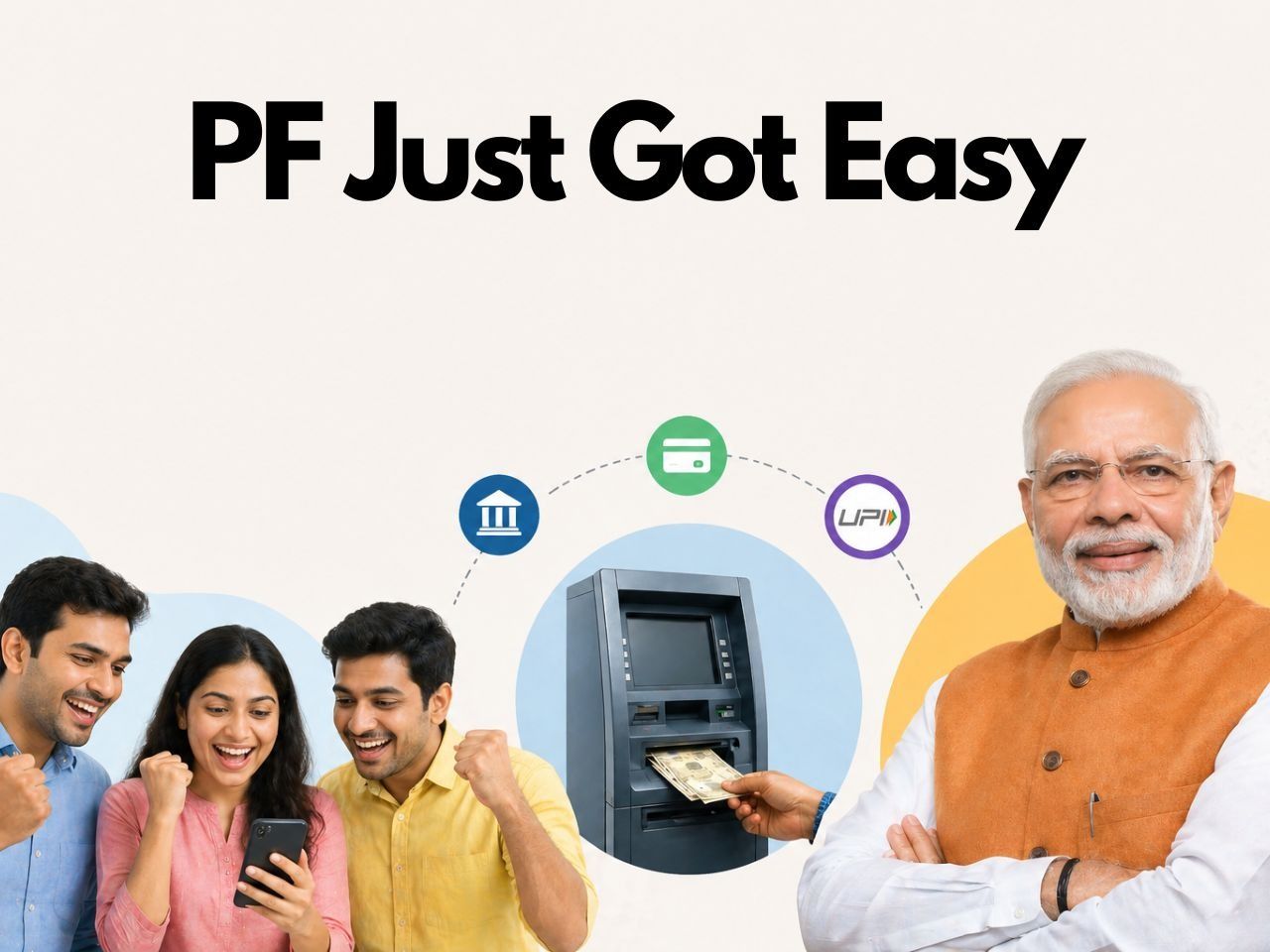
In what could become one of the most user-friendly reforms in India’s financial ecosystem, Prime Minister Narendra Modi is expected to launch a new facility that will allow Employees’ Provident Fund (PF) withdrawals directly through ATMs as early as May.
If implemented as planned, this could transform PF access from a bureaucratic process into something as simple as withdrawing cash from your bank account.
From Paperwork to Instant Access
The initiative is part of the broader EPFO 3.0 framework—a next-generation overhaul of how PF accounts are managed and accessed.
At its core, the idea is simple:
Make PF withdrawals fast, seamless, and digital.
Under this system, PF accounts will be fully integrated with banking infrastructure. Once linked, users will no longer need to navigate lengthy claim procedures or visit offices.
Instead, they will be able to withdraw eligible funds directly from ATMs—just like regular bank cash.
How the System Will Work
The new mechanism is being designed around a tightly integrated digital identity framework.
Each subscriber’s PF account will be connected to:
- Universal Account Number (UAN)
- Aadhaar
- Linked bank account
Once this integration is complete, withdrawals can happen instantly—without manual approvals or delays.
But it doesn’t stop at ATMs.
The system is also expected to support withdrawals via UPI platforms, opening up multiple digital access points for users. Backend automation will handle claim validation and processing in real time, effectively eliminating waiting periods.
In short, your retirement savings could soon be just a tap—or a card swipe—away.
Why This Reform Matters Now
This move comes at a time when reliance on PF savings is steadily increasing.
According to the Ministry of Labour and Employment, the Employees’ Provident Fund Organisation (EPFO) settled a record 8.31 crore claims in FY 2025–26, a sharp rise from 6.01 crore in the previous year.
What stands out is the nature of these claims:
- 5.51 crore were advance or partial withdrawals
This indicates that PF is no longer seen purely as a retirement corpus—it is increasingly being used as a financial safety net during immediate needs.
And that makes speed of access critical.
Faster Processing, Less Friction
The EPFO has already been moving toward a more efficient system—and the numbers reflect that shift.
- Over 71% of advance claims were processed within three days
- A large majority of claims were handled through auto-mode
- Most users no longer needed to upload cheques
- Many members updated details and linked bank accounts independently
These changes have significantly reduced dependency on employers and intermediaries.
The upcoming ATM withdrawal facility builds directly on this momentum—taking the final step toward real-time access.
The Bigger Digital Push
Alongside this, EPFO is preparing to launch the E-PRAAPTI portal—a platform designed to solve another long-standing issue: dormant or untraceable PF accounts.
Through this portal, users will be able to:
- Trace old accounts
- Link multiple PF accounts
- Activate inactive funds
Initially, access will be enabled through Member IDs and Aadhaar login, with plans to expand features for users who may not have complete account information.
This is particularly important in a country where job mobility is high and fragmented employment histories often lead to scattered PF balances.
A Shift in How India Sees Retirement Savings
Taken together, these developments signal something bigger than just a tech upgrade.
They represent a shift in philosophy.
PF is no longer being treated as a locked-in, distant savings pool. It is being repositioned as a flexible, accessible financial resource—available when people need it the most.
And by bringing ATM and UPI access into the system, the government is effectively aligning PF with the expectations of a digital-first generation.
What This Means Going Forward
If rolled out successfully, this reform could:
- Redefine how millions access their savings
- Reduce delays and administrative friction
- Increase trust in the system
- Encourage better financial planning
Most importantly, it puts control back in the hands of the user.
Because for the first time, accessing your PF may not feel like a process.
It may just feel like using your own money.